top of page
Search

On February 16, 2026 Depop launched a U.S. campaign,“Depoponomics”, directed by Dave Meyers a grammy award winner and featuring singer songwriter Kelis. Per the announcement: “Depoponomics is a national U.S. campaign that redefines resale as a modern personal economy, where selling clothes helps fund everyday life." The campaign includes a cameo appearance by the pop/ R&B singer, Kelis. Her 2003 single "Millionaire" provides the soundtrack for the spot. The ads are on tv, digital and video and will run through May 31st. These Depoponomics spots note there are no selling fees and also clearly informs in the fine print "Payment processing fees and boosting fees still apply."


As part of the campaign, Kelis launched her own Depop shop, listing about a dozen items,

including pieces worn by her in the campaign. A screenshot of the top portion of her Depop shop is below and another screenshot follows showing the remaining item for sale in her shop.


On February 23, 2026, one item in her shop remained, a Ganni blouse and I noticed the price was reduced by $10 from when it was originally listed on February 18, 2026. I was surprised that the blouse had not yet sold, had been reduced and that so few of her items were listed. Perhaps more will be included in the future.


On February 18, 2026 The RealReal announced it will be reopening its flagship San Francisco store for consignment and shopping, bringing it to 17 locations throughout the US.


TheRealReal has been slowly adding permanent locations including one in 2025: Summit, New Jersey and two in 2024: Miami Design District which is the second store in Florida (A store is in Palm Beach) and Houston, Texas, its second store in Texas, with Dallas being the other location. (Note: As of this writing, the company's website includes a note about a limited time consignment event in Tampa, Florida. However, when clicked that, the page that appeared states: "Oops! Looks like the page you requested is not available."


Officially opening on February 26, 2026, it is a two story 8,100 square feet space in Union Square and the address is 253 Post Street. The RealReal was founded in San Francisco in 2011 and it sounds like this store has been thoughtfully planned with unique features.

The press release notes: "A curated mix of San Francisco inspired art, locally sourced vintage furniture, and thoughtful architectural details grounds the store in the city’s creative spirit, blending heritage, sustainability, and modern luxury. On weekends, the store will host coffee from Painted Leopard, a woman-owned specialty coffee roaster known for its single-origin blends and popular pop-ups."


On February 18, 2026 Etsy which acquired UK based Depop in 2021 for about $1.62 billion announced that it was selling it for $1.2 billion (all cash deal) to eBay, with the acquisition expected to close by the end the second quarter of this year.


It is expected that Depop will retain its name and platform. This looks to be a good purchase for eBay as it will grow eBay’s market of GenZ consumers. Press releases note that Depop has seven million active buyers, with nearly 90% of them under the age of 34, and over 3 million active sellers. For eBay, the acquisition bolsters its position with younger consumers who have a strong interest in resale and increasingly view secondhand as a normal way to shop. Depop, in turn, should benefit from eBay’s global capabilities, including its international reach, marketplace infrastructure, and operational expertise.


According to an eBay press release:"The addition of Depop will accelerate eBay’s C2C strategy by deepening its reach with younger, fashion-forward consumers and expanding its presence in one of the most dynamic areas of resale. As part of eBay, Depop will benefit from eBay’s global scale and suite of capabilities, including its financial services, shipping solutions, and trusted experiences like Authenticity Guarantee to further accelerate growth and enhance the buyer and seller experience."


In early February Sydney, Australia based Cosette, a luxury handbag reseller that has been operating for about 11 years announced it would be closing. In its announcement, it stated: "Unfortunately, the market has changed and we – rather than our mission to make luxury more affordable, every day – were sometimes the story." The part "were sometimes the story" warrants explanation.


Starting in 2023, nearly one thousand customers complained to NSW (New South Wales) Fair Trading alleging that Cosette was selling "superfakes", high-quality counterfeit handbags priced near authentic retail rates. Many of these claimants provided third-party authentication reports to support their allegations; however, Cosette consistently denied any wrongdoing.


Following a year long investigation, the regulator reported in 2024 that it found no evidence of counterfeit sales. Crucially, the items examined by the regulator were confirmed as authentic by the brands themselves. NSW Fair Trading also cast doubt on the reliability of certain third-party authentication services, citing vague disclaimers and a lack of identifiable expertise.


Cosette highlighted its clearance by NSW Fair Trading and continued to operate, although it had already scaled back significantly during the investigation. While the company cited "changing market conditions" in announcing its closure this month, the sheer volume of complaints and the resulting reputational damage appear to have been difficult to overcome and likely contributed to its decision to shut its doors.


Full Disclosure: The content in this post is for general informational purposes only and is not intended as, nor does it constitute, professional, financial or legal advice. Research for this post ended on February 23, 2026. I participate in reselling on the Poshmark, Vinted, Mercari and The RealReal platforms. I have not had any disputes with them, nor have they provided me with any benefits except for payments of items sold via their platforms. All opinions are my own, and I have not received any compensation for writing this post. Readers should not act upon this information without seeking professional counsel licensed in their specific jurisdiction.


The fashion and resale markets generated considerable news and optimism for growth over the last year, driven by growing comfort with buying secondhand, Gen Z participation, sustainability concerns, and consumer reactions to announced tariffs.


In luxury resale, especially handbags and watches, many observers have predicted that repeated retail price increases would send more buyers to the secondary market. In some cases, that premium has flipped entirely, with certain Hermès Birkin handbags and Rolex watches reportedly reselling for more than their original retail prices on fashion and related resale platforms.


At the same time, 2025 headlines in luxury resale were dominated by authentication concerns, “superfakes,” and a growing list of complaints about platform policies and customer service. As volumes rise, legal scrutiny is rising with it. In 2026, luxury resale platforms are operating in a landscape that is increasingly protective of brand aura and focused on consumer transparency, meaning legal risk is moving from background noise to a core strategic issue.


Based on ongoing review of the luxury resale market, several legal issues stand out as having wide ranging implications for platforms and brand owned resale programs. This post highlights a few of the topics that luxury resale operators need on their radar to stay ahead of the curve. Several other legal related topics will be covered in future posts, including EU regulations. The information in this post is for general informational purposes only and is not intended as, nor does it constitute, legal advice or professional advice.


Resale Platform Models

There are three primary models in luxury resale, and while each has its own operating playbook, they share many of the same legal risks and potential rewards. These three models are: peer‑to‑peer marketplaces, managed consignment marketplaces, and brand owned resale programs.

Peer‑to‑Peer Marketplaces

Peer‑to‑peer platforms provide the technology infrastructure and rules that connect buyers and sellers. They do not take possession of inventory. The seller is responsible for photographing the item, writing the description, posting the listing, and shipping directly to the buyer. Examples include Poshmark and Depop.

Some peer‑to‑peer marketplaces add a step for higher value items in specific categories. When an item sells above a certain price threshold, it must be sent to the company’s authentication center before shipment to the buyer. Platforms such as Vestiaire Collective, eBay, and Poshmark incorporate this kind of authentication process for select listings. (Note there are different policies among these three platforms.)

Managed Consignment Marketplaces

Managed consignment or managed marketplaces act as intermediaries, taking possession of inventory and managing the resale process.. These companies authenticate incoming items, set pricing, take photos, write and post the listings, ship the orders to buyers, and then pay the original owner, whether on a consignment basis or through an outright buy out.


Examples in this category include Fashionphile, MyGemma, and Bag Borrow or Steal. These companies tout authentication, curation, and customer experience as part of their value proposition. This model tends to concentrate legal risk at the platform level because the company is involved in both representation and handling of goods.

Brand Owned Resale Programs

Fashion brands are increasingly launching brand owned resale programs in partnership with technology providers that specialize in resale operations. In these models, the original brand sells its own pre‑loved goods through take back programs (often in exchange for store credit -- in-store or online) and/or peer‑to‑peer platforms operated under the brand’s label.

Examples include Oscar de la Renta Encore (with Archive), Victoria Beckham’s The Re‑Loved Archive (with Faume), and Canada Goose Generations (with Trove). These branded programs are not one‑size‑fits‑all. Each has its own platform architecture and policies around accepted categories, original sale dates (for example, only items from recent seasons), and payout or credit structures, including where and how credits can be used.


While these three models differ in how hands‑on they are, they are all entering a 2026 legal environment that is more protective of brand identity and more demanding on consumer‑facing disclosures. From high‑profile trademark battles to new rules on digital transparency, luxury resale is starting to look and feel more regulated.


Lawsuits Reshaping Luxury Resale

Lawsuit: Chanel v. What Goes Around Comes Around (WGACA)

The legal battle between Chanel and luxury reseller What Goes Around Comes Around (WGACA) began in March 2018 in the U.S. District Court for the Southern District of New York and has become one of the most closely watched cases in the resale sector.


Chanel’s complaint covered these main issues:


  • False Association: Chanel argued that WGACA’s marketing (using Chanel’s logo and hashtags like #WGACAChanel) misled consumers into believing there was an official partnership or endorsement between the two companies.


  • The Sale of "Non-Genuine" Items: Chanel argued that WGACA sold items that, while potentially made by Chanel factories, were never authorized for sale. This included Point of Sale (POS) items such as display mirrors, tissue boxes, and VIP gifts-with-purchase that Chanel never intended to enter the commercial market.


  • Stolen/Voided Serial Numbers: Chanel argued that 13 handbags bore serial numbers that had been stolen from a Chanel factory in Italy years prior and subsequently voided in Chanel's internal database.


In February 2024, a jury found WGACA liable for willful trademark infringement, false association, unfair competition, and false advertising and awarded Chanel $4 million in statutory damages. The Court later entered judgment imposing a permanent injunction restricting how WGACA can use Chanel’s trademarks and branding, including limits on hashtags and discount codes, and requires clear disclaimers that WGACA is not an authorized reseller Additionally, Chanel obtained more than $560,000 in litigation costs, though its request for $6.7 million in attorney’s fees was denied.

Current Status (January 2026): The case is currently on appeal in the U.S. Court of Appeals for the Second Circuit and the $4 million award stands for now. Whatever the outcome is on appeal, the message to resale operators is that courts are increasingly willing to scrutinize how platforms invoke brand names and to treat “willful blindness” around sourcing and that serial numbers as a serious issue.


Luxury Resale Compliance Checklist

For industry players, the immediate question is how to convert these developments into practical risk controls. The following 2026 checklist is a starting point for keeping luxury resale platforms off the litigation radar.

1. Marketing and social media

The Court ruled that "nominative fair use" allows the reseller to name the brand to describe the bag, but it cannot co-opt the brand’s identity.

Hashtags: Don't use combined hashtags such as #WGACAChanel. Use independent tags instead.


Discount Codes: Do not use codes such as "HERMES10" or "COCO25" that leverage a brand’s intellectual property or founder’s name to drive sales.:

2. Inventory and “non‑genuine” sourcing filters

The First Sale Doctrine only protects the reseller if the brand originally intended the item for retail sale.


Exclude point‑of‑sale items: Remove display pieces, such as branded tissue boxes, and VIP “gift with purchase” items that were never sold at retail, as these can be treated as non genuine in the trademark context.


​3. Authentication and serial‑number provenance

Platforms are being held to a "willful blindness" standard regarding stolen goods.


Serial number checks: For brands that publish or share stolen number ranges, cross‑reference inventory against those ranges; Chanel’s stolen 17 million series numbers are a prominent example in this recent litigation.​


Disclaimers and independence: Prominently state that the platform is not an authorized reseller or affiliated with the brands it sells and that authentication is conducted independently, without endorsement from brand owners.​s.


4. “Material difference” and restoration

The "First Sale Doctrine" can be voided if a product is "materially different" from the original.


Restoration refurbishment disclosures: If a handbag has been re‑dyed, had hardware changed, or undergone a “spa” process involving non‑original parts, clearly label item “restored,” “altered,” or similar language so buyers understand what they are buying.


No “Frankenstein” inventory: Do not sell items assembled from parts of multiple authentic piece, leading to what is known as “Frankenstein” bags. These hybrids raise both authenticity and trademark questions, even where components began as being genuine.


Junk Fees, Returns, and Drip Pricing

Lawsuit: Fadrigo v. The RealReal, Inc.

In July 2025, a putative class action suit was filed against The RealReal in California, challenging a $14.95 “Return Shipping and Processing Fee” (RSPF) charged on returned items. The complaint alleges that the fee is a classic “junk fee,” a mandatory charge that is not clearly disclosed during checkout and that allegedly exceeds the actual cost of returns processing, effectively turning the fee into a hidden profit center.

The case, now in the U.S. District Court for the Central District of California, focuses on two core issues:


  1. Whether the fee was adequately disclosed at the time of purchase.


  1. Whether its amount of the fee bears a reasonable relationship to the underlying logistics costs.


Current Status (January 2026): The case is currently in the U.S. District Court for the Central District of California (after being removed from state court). A pivotal hearing is scheduled for February 13, 2026 that concerns a "Motion to Compel Arbitration."


The RealReal is attempting to use the fine print in their Terms of Service to move the case into private arbitration. If The RealReal wins this motion, the class action is effectively over, and individual customers would have to sue one by one, which is a win for the platforms.


If the judge denies the motion, it signals to platforms that their Terms of Service might not be enough to save them from "junk fee" litigation in court. This could force an industry shift where platforms must show return fees as prominently as the item price to avoid "junk fee" liability.


While the Fadrigo case specifically targets a return fee, it sits at the heart of a much larger controversy, Drip Pricing. Drip pricing is a deceptive pricing technique where a company advertises only a portion of a product's price and then reveals additional fees as the consumer proceeds through the buying process. The goal is to hook the consumer with a low headline price before they realize the final cost is significantly higher.


Return Fees Compliance Checklist Audit

For luxury resale platforms that charge any return shipping, restocking, or processing fee, 2026 is the year to treat return policies as a regulatory risk, not just a customer service issue. The following 2026 checklist is just a starting point.


Checkout transparency: Under California’s “Honest Pricing Law” (SB 478) and similar state statutes, mandatory fees must be disclosed upfront; the first price the consumer sees should reflect the “all in" cost, excluding only allowable items such as taxes and certain shipping charges.

Order Summary Detail: Ensure that any return related fee appears as a clearly labeled line item (for example, "Return Shipping & Processing Fee”) in the order summary before the customer clicks “place order,” rather than being buried under vague labels such as “handling.”

Cost Linkage: Review whether each return fee is in line to actual costs, such as carrier rates and processing labor, rather than functioning as a margin enhancer. Note that tiered fees based on weight or category could help demonstrate a cost recovery intent.

Terms of Service Mechanism: Ensure users actively assent to updated terms through clickwrap agreements, as passive browsewrap implementations (footer links only) are under increasing scrutiny in consumer cases.


Buy Now Pay Later (BNPL) Regulations

For many shoppers who want to buy luxury goods, the decision to do so is financially out of their reach. Also there are those who could easily handle paying the one lump sum might decide not to do so.


To attract buyers, many platforms have been offering a third party payment plan option. The plans are called Buy Now Pay Later (BNPL). Typically the purchase can be paid for over four interest free payments and the buyer does not have to wait to receive the bag until all payments are made. The option to use BNPL is available at checkout. Each BNPL company has its own features, fees and policies. Leading providers include Klarna, Affirm, and PayPal. The Buy Now Pay Later industry has been the focus of federal legislation and also individual states.


BNPL is a Double Edged Sword

Before looking at the legal risks, it’s important to recognize that BNPL introduces significant operational headaches for luxury resellers. While it attracts buyers by lowering "sticker shock," it also facilitates costly consumer behaviors, including those noted below.


Wardrobing:Though BNPL lowers the initial cost of the purchase, it could lead to an increase in "wardrobing." In this scenario a customer buys an item, wears it for a specific event, and then returns it. Since the buyer has laid out just a small fraction of the total price, the psychological and financial barrier to renting luxury goods for free is significantly reduced. However, resellers then must expend extra employee time and resources to inspect and relist items that have been returned. Plus, there could be quite a bit of time consuming back-and-forth between the customer and the reseller if the return is initially denied.


Bracketing Combined with Buyer’s Remorse: BNPL makes it easy for consumers to bracket their purchases. For instance, the purchaser could buy several versions of a similar high ticket item using different BNPL partners. Once those individual payment schedules start to pile up, buyer’s remorse could sink in. The resale platforms would then need to deal with returns as outlined above. Not only are sales lost because of the returns, they take on added manual labor time.


Consumer Financial Protection Bureau

In May 2024, the CFPB (Consumer Financial Protection Bureau) issued a landmark Interpretive Rule officially classifying BNPL providers as "credit card issuers" under Regulation Z (the Truth in Lending Act). Even though BNPL is often interest free and has only four installments, the CFPB determined that the digital accounts used to access these loans function as credit cards.


Throughout 2024 and 2025, the CFPB attempted to bring the BNPL industry under federal control by classifying digital accounts as credit cards, granting those who used BNPL the same protections as traditional Visa or Mastercard users, covering dispute rights and refund guarantees.


This rule was called landmark because, for the first time, the CFPB officially treated BNPL credit products as subject to credit card protections under federal law, which was a significant shift from the longstanding view that these payments were outside Regulation Z. It effectively changed how many BNPL lenders would need to operate if the rule remained in force long term.


After leadership changes at the CFPB on May 6, 2025, the CFPB retreated, announcing it would not prioritize enforcement of its rule that classified BNPL providers as credit card issuers.


States Enact "Mini-CFPB" Laws

As federal oversight of the "Buy Now, Pay Later" (BNPL) industry has pulled back, a new wave of state evel "Mini-CFPB" laws has taken center stage. Leading the charge are New York (The BNPL Act) and California (SB 825), both of which rhave been fullly implemented on January 1, 2026.


These state agencies now hold significant power, including:

  • The power to void BNPL loans.

  • Levy heavy fines for "drip pricing," the hidden fees.

  • Freeze a reseller's ability to process payments if their third party partners, such as Klarna, Affirm, Klarna, Afterpay aren't locally licensed.


1. The New York BNPL Act

Enacted as part of the New York FY2026 budget, this is now considered the most comprehensive BNPL law in the nation. It transforms BNPL from a "fintech loophole" into a regulated financial product. The law forces BNPL lenders to offer the same dispute and refund rights as credit cards, essentially codifying the rule the CFPB walked away from.


A Licensing Mandate: Every BNPL provider must be licensed by the NY Department of Financial Services (DFS).


The "Unlicensed Lending" Concern: If the financing partner isn't licensed in New York, the resale platform could be held liable for "facilitating unlicensed lending." In New York,

loans made by unlicensed entities can be declared void and uncollectible.


Key Note: The law applies to any BNPL loan made to a "consumer," which the Act defines as an individual who is a New York resident. So, even if a luxury reseller is based in Florida and sells a luxury watch to a customer in New York using a BNPL service, the transaction must comply with New York’s licensing, disclosure, and "ability to repay" standards.


"Ability to Repay" Standards: New York now mandates "risk-based underwriting." Lenders must verify a consumer's ability to pay before the loan is issued. This is an attempt to prevent "phantom debt" where consumers over leverage themselves.


Phantom debt is consumer debt that is actually a real debt and is is enforceable. However, it is not fully visible, or or tracked by lenders, nor consumers and even regulators when credit decisions are made. Because many BNPL transactions are not consistently reported to the major credit bureaus, this debt exists "off the books" of a typical credit report. As of 2026, reporting practices still vary significantly by BNPL provider and product. for example, while a longer-term monthly installment loan is tracked a four payment installment plan might not be reported.


2. California’s SB 825: Ending the "UDAAP" Shield

Effective January 1, 2026, California's SB 825 closed a major regulatory loophole. Previously, many licensed lenders were exempt from certain oversight by the Department of Financial Protection and Innovation (DFPI) under the original California Consumer Financial Protection Law. However, this is no longer.


Note: California is now specifically targeting "loan stacking," the risky practice where a customer takes out multiple BNPL loans across different platforms simultaneously, leading to an invisible debt spiral.


Immunity ended: The new law clarifies that even licensed banks and fintechs are fully subject to DFPI enforcement regarding Unfair, Deceptive, or Abusive Acts or Practices (UDAAP).


Third-party liability: The DFPI has clarified that its authority extends to "third-party service providers." If the BNPL partner utilizes a deceptive user interface (UI), California can hold the resale platform responsible for that consumer's experience.


Drip pricing enforcement: This gives California the the right to sue companies specifically for drip pricing. In the context of the Fadrigo v. The RealReal case, this includes practices like hiding a "Return Shipping and Processing Fee" (RSPF) or failing to disclose the total cost of a BNPL loan until the final click.


Direct enforcement: Even if a platform is already licensed by the DFPI, this financial watchdog can now sue the BNPL provider directly for UDAAP violations, bypassing previous administrative hurdles.


For luxury resale platforms, being "compliant on a national level" is no longer enough. To protect your business in 2026, you must be compliant on a state-by-state basis, starting with the rigorous standards set by New York and California.


BNPL Partner Checklist Audit

The following 2026 checklist is a vital starting point for any platform utilizing Affirm, Klarna, Afterpay or similar financing services. To avoid "facilitator liability" under new state laws, your legal team should verify these three areas of compliance:


1. Licensing Status

Question: Are you currently licensed or authorized under the New York BNPL Act (Article 14-B) and the California Financing Law?


The Risk: In New York, if a provider is unlicensed, the loans they issue to NY residents can be declared void and uncollectible. As a reseller, you do not want to be the at risk for an illegal lending operation.


2. The "Refund Loop" Protocol

Question: When a returned is triggered by the resale platform, do you immediately pause the customer’s next installment, or do you continue charging them until the refund is fully cleared?


The Risk: Continuing to collect payments on a returned item is considered an Abusive Practice under the 2026 expansion of UDAAP laws. California’s DFPI and the NY Attorney General are specifically targeting "phantom payments" that occur while a consumer is waiting for a return to be processed.


3. Data and Surveillance Disclosure

Question: Do you clearly disclose if you use customer data for "Surveillance Pricing" or algorithmic credit limits, and are you compliant with the NY Algorithmic Pricing Disclosure Act?


The Risk: Since late 2025, New York law requires a prominent notice"THIS PRICE WAS SET BY AN ALGORITHM USING YOUR PERSONAL DATA" if a price or credit limit is adjusted based on browsing history or zip code. If your BNPL partner’s "instant approval" logic uses this data without disclosure, your platform could be cited for lack of transparency.


Future Legal Topics to be Covered : This post highlighted only a few of the critical legal shifts currently impacting luxury resellers. There are more topics t be covered and also as the landscape continues to evolve in 2026, I will be reviewing other timely topics in future posts, including new EU regulations.


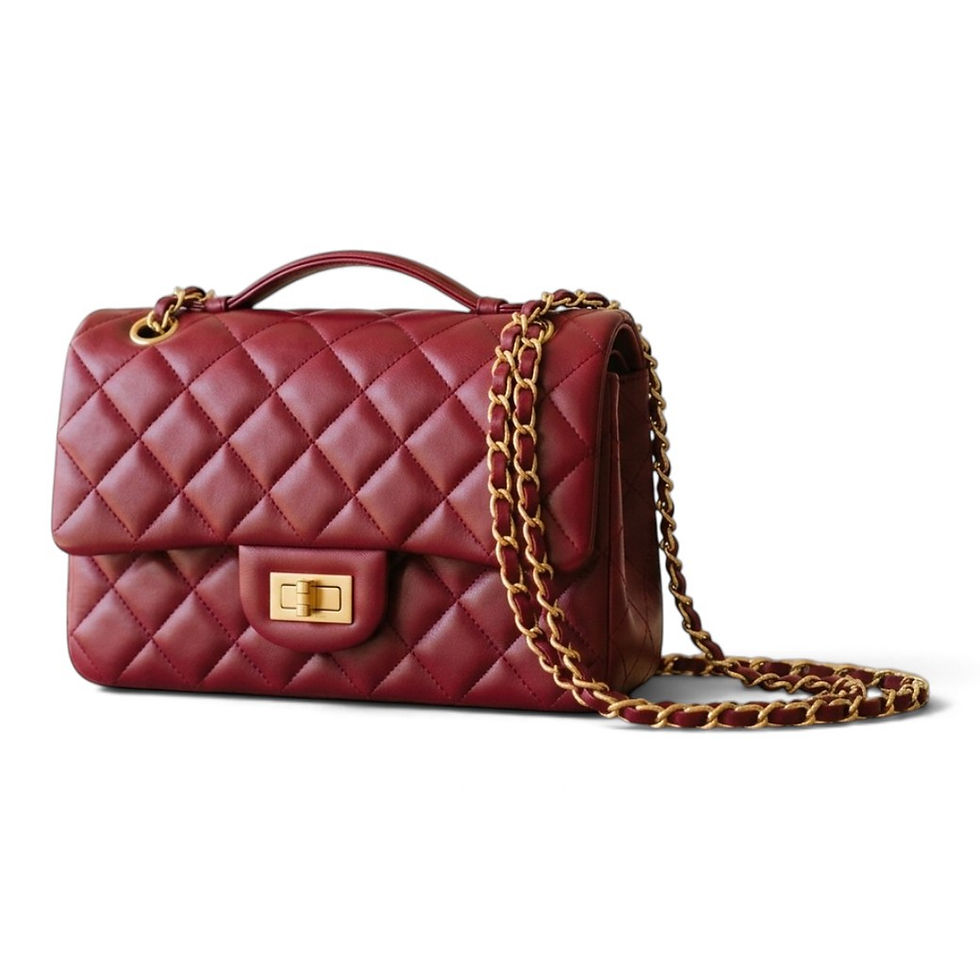
Full Disclosure: The content in this post is for general informational purposes only and is not intended as, nor does it constitute, professional, financial or legal advice. Research for this post ended on January 8, 2026. I participate in reselling on the Poshmark, Vinted, Mercari and The RealReal platforms. I have not had any disputes with them, nor have they provided me with any benefits except for payments of items sold via their platforms. All opinions are my own, and I have not received any compensation for writing this post. Readers should not act upon this information without seeking professional counsel licensed in their specific jurisdiction. Images in this post were generated by Gemini AI Pro and Perplexity AI Pro.


Vinted, the peer-to-peer resale marketplace, announced in mid-November 2025 it would step up its business efforts in the United States. Since Vinted has been less known than competitors in the United States such as Poshmark and Mercari, it seems a timely opportunity to review the company’s key strategies, strategic advantages, and potential vulnerabilities as well as well as sharing my experience so far with selling to a buyer across the pond.


€8 billion valuation

Vinted, a Vilnius, Lithuania-based company founded in 2008 and now active in about 26 markets, captured significant attention when a November 16, 2025 Financial Times article reported it had reached a valuation of €8 billion, up from €5 billion about a year earlier. The article also noted that a potential share sale, understood to be driven by existing shareholders, was under review that drove this valuation.


Combined with Vinted being profitable for the first time in 2023, again in 2024, and expected to remain so in 2025, the company appears in a strong position. However, resale remains a fiercely competitive market. Success depends on several factors including maintaining efficient, cost-conscious operations and drawing the sellers who provide the inventory that attracts buyers. A closer look at Vinted’s recent strategic moves suggests it understands these challenges well.


Introduced UK-US Connection in November 2025

In mid-November 2025, Vinted CEO Thomas Plantenga announced on LinkedIn, “Next up: testing a UK-US connection to understand our American audience and expand our global reach.” He reiterated this plan during an interview with Bloomberg TV, and the initiative has since drawn widespread coverage.


Although Vinted has operated in the U.S. since 2013, publicly available data suggest its user base has remained small with limited visibility. Recognizing the untapped potential of the U.S. market, the UK-US Connection strategy represents a logical, measured step forward.


The pilot began in late November 2025. According to the Vinted U.S. site, the new feature is currently available only to users in New York, New Jersey, and Connecticut, as well as those in the UK. The test includes several restrictions:


  • Only items and bundles valued under £120 (excluding buyer protection, shipping, and customs tax) can be sold from the U.S. to the U.K.

  • Items must weigh 4.4 lbs or less.

  • To make the experience appealing, Vinted emphasizes convenience and affordability:

  • No additional steps are required for international sales; Vinted manages customs processing.

  • International shipping typically takes 5–8 business days.

  • Vinted will temporarily cover customs tax for international transactions.


While it remains unclear how long the company will absorb these costs, the limited geographic scope should keep expenses manageable while yielding valuable insights. Once Vinted evaluates results from this pilot, it may choose to expand to additional U.S. regions.


Summary Financial Information

Vinted Limited (A)

Year

Gross Merchandise Value

Revenue

Net Profit

2022

Around € 6.2 billion

€ 370.2 billion

(€ 20.4 million) loss

2023

Around € 9 billion

€ 596.3 billion

€ 17.8 million (B)

2024

Around € 10 billion

€ 813.4 billion

€ 76.7 million

2025 Projection (C)

Over € 10 billion

Over €10billion


(A)      Consolidated Statement including all subsidiaries. 

As Vinted does not report specific financial results by country, I’ve relied on widely circulated third-party data in sections below. It is worth noting that while the figures noted in sections below are unofficial, Vinted’s management has not publicly disputed these estimates, suggesting they generally align with the company’s market reality.

(B)    First profit ever, in 2023.

(C)     Projection from Thomas Platenga, CEO in a mid-November 2025 LinkedIn post.


Summary

Vinted’s Apparent Strategic Advantage

Vinted’s Potential Vulnerabilities


  • Zero selling fees could encourage more listings.

  • Buyer protection fees are the leading revenue source.

  • Transparent with fees so buyers see the breakdown of what is included in the total price.

  • Sellers using fee based promotion tools are shown the back-up prior to paying for them.


  • The secondhand marketplace is highly competitive and it is intensifying.

  • Diversified product lines.

  • Authenticity issues are a persistent problem.

  • Ongoing focus on cost with investments in infrastructure including Vinted Go and Vinted Pay.

  • Delivery problems continue, including complaints about taking a long time for delivery.


  • Ongoing disputes regarding purchased items, such as not matching with photos and descriptions. (Per social media and articles)

  • Changes to the app / website, which would probably be secret until launched. Some changes could receive favorable reviews.

  • Changes to the app / website, such as the November 2025 update related to how sizes are listed that was met with complaints.

  • Expanding into new geographic markets leading to new buyers and sellers.

  •  Expanding into new geographic markets with different regulations, different behaviors and adds costs. (See section below about US-UK market expansion).

Vinted’s Apparent Strategic Advantages Having plentiful inventory is a key success factor for a resale marketplace.

  • Vinted's ability to attract inventory is believed to be closely tied to its policy of zero selling fees. In fact, zero selling fees seems to be the basis of its business model.

  • Zero selling fees means Vinted’s sellers receive the full sale price. They do not incur commission costs or payment processing fees, which is the case with many other platforms, such as Mercari, Poshmark and consignment platforms. The zero seller fees is a competitive advantage.

  • Vinted has a buyer protection fee that supports the zero selling fees.

  • Every purchase includes this buyer protection fee and is automatically charged. Below is the calculation:

    • A fixed amount of $0.70; plus

    • 5% of the item price agreed to between the Buyer and the Seller, not including the shipping costs, any additional costs and applicable taxes

  • Per website, buyer protection fee covers:

    • Refund for these reasons, item: (1) doesn't arrive (2) arrives damaged (3) is significantly not as described. 

    • Extra measures against fraud.

    • Support from customer service team. Note that all rules must be followed to receive a refund and these are detailed on the Vinted website.

  •  Transparent with fees so buyers see a breakdown of what is included in the total price.

    • Sellers using fee based promotion tools are shown the back-up prior to paying for them.

  • Diversified product lines. When Vinted started, it focused only on second-hand fashion. Has expanded to include other categories such as electronics, home, hobbies and collectibles, toys, games and books.

  • Ongoing focus on cost control. In an April 25, 2025 website post, when discussing the financial results for 2024, the CEO stated: “This performance is the result of our hard work to deliver products that bring high value for members at the lowest possible cost. We do this by having a relentless focus on cost control, building complex infrastructure ourselves, and innovating to bring new services and solutions at scale. It's this mix of scale, innovation, cost control that helps us succeed. 

  • The infrastructure initiatives include establishing Vinted Go for logistics and Vinted Pay for payments. These are not yet fully integrated and notable is that Vinted Pay is in a pilot phase. (These businesses are discussed in sections below.) “…by having a relentless focus on cost control, building complex infrastructure ourselves, and innovating to bring new services and solutions at scale. It's this mix of scale, innovation, cost control that helps us succeed.” Source: Vinted 2024 Annual Report.

  • Secondhand shopping is now considered mainstream, which supports continued market expansion Vinted’s alignment with sellers and buyers focus on the environment and sustainability. “A core element of Vinted's strategy is its commitment to encouraging consumption practices that have a lower climate impact.” In 2024, the Group remained dedicated to assessing and disclosing its environmental impact. Source: Vinted 2024 Annual Report.


Vinted’s Potential Vulnerabilities

  • The secondhand marketplace is highly competitive, and it is intensifying which could impact margins and profits.

  • For instance, more brands are getting involved with their own resale programs. (Examples: Lululemon Like New, ba&sh Secondhand, Sandro Secondhand)

  • Expanding into new geographic markets means it must comply with additional regulations and address various delivery and logistical challenges. For instance, in November 2025, it introduced a test UK–US connection. At least for a while Vinted will be responsible for customs related activities and fees, for both markets a new responsibility.

  • Authenticity issues are a persistent problem. Although the company does not provide formal statistics, there is ongoing negative discussion on social media about counterfeit goods being sold on the platform.

    • Note: Vinted 2024 Annual Report states: “Additionally, when buying an item of selected categories and brands a user may opt for additional service to verify the authenticity of such item, for a separate fee, in which case the item before being delivered to the buyer undergoes a physical inspection and authenticity.

  • Per the website:“Item verification is currently available in France, Italy, Belgium, Germany, Spain, The Netherlands, the United Kingdom, Poland, Portugal, Romania, Denmark, Sweden, Lithuania and Finland.” Also:

    • A listing must meet the criteria (e.g. price, brands, category) to become eligible for verification. Members will see a diamond badge on items that are eligible.

    • The service fee is paid for by buyers and is visible on the item page and the checkout.

    • After checkout, the order is first shipped to the verification hub. After successful verification, the order then goes to the buyer. However, if the item fails verification, it is returned to the seller.

  • Based on my review of publicly available information, it seems Vinted is focused on “verification” rather than “authentication”.  The verification service is a physical inspection by “experts, reviewing the hardware, stitching, serial numbers and logos. If an item passes verification, it receives a “Verified” badge and is sent to the buyer. Authentication usually  ends with a written document (or a certificate of authentication) stating an item is genuine. Vinted does not provide such a document or statement.

    • It cautions sellers: “If the item you listed is sold, you should keep a copy of all their proofs of authenticity before sending the parcel. We may request that you provide documentation (such as invoices or authenticity certificates) showing the authenticity of your items.”

  • Delivery problems including complaints about taking a long time for deliveries despite the roll-out of Vinted Go as well as reporting problems with other carriers.

    • Trustpilot has about 39,000 reviews of Vinted Go. It is rated 2.9 stars out of 5.0 stars., with 40% being 1 star. (Note: Even Trustpilot has complaints that it is not truly impartial. Nevertheless, it is included to see at least the types of complaints.  https://www.trustpilot.com/review/vintedgo.com

  • Disputes of purchased items not matching photos and descriptions. As with other resale platforms this is a risk. Once people have had one or a few bad experiences with items they received, or a seller has to deal with a number of false buyer claims, these people could stop dealing with Vinted. Note: Per social media posts, the following events are happening across other resale platforms. I do not have proof from Vinted that these have occurred on the Vinted platform.

  • Related to this are fraud situations such as:

    • Empty box scam - Seller sends an empty box and possibly takes photos of the item being packaged. But, then ends up shipping an empty box. The buyer could have a difficult time getting a refund. The buyer could also claim she was sent en empty box, and also would have a problem receiving a refund.

    • Wardrobing - If a buyer buys an item that has the tags attached, it is possible the buyers wears the item with the tags attached. However, after wearing it one or more times, she decides to return the item. She might say it was not as described and asks for a refund.

    • Using AI for creating fake damages - A more recent scam is that buyers have been using AI to create fake damages to get a refund and also end up keeping the item that is really in fine condition. Instead of actually damaging the item, she would use AI to change the condition of the item, such as placing a stain on it, or showing a broken zipper. The buyer will show the AI image with the damage and request a refund from the resale platform. Meanwhile the buyer keeps the item that was never damaged, and also receives a refund. The seller could not receive any funds and the item she sold would not be returned to her.

  • Changes to the app / website that end up frustrating sellers and buyers. For example, what has been considered by many as a poorly communicated update in November 2025 is related to Vinted’s change to its clothing size system. This was in connection with the introduction of the UK-US connection announcement.

    • The new system grouped sizes (such as Sizes: 4–6;S 12–14;M) rather than having users select single sizes. This made it difficult to search and filter for specific sizes.

    • The items were automatically recategorized. However, at times items went into the incorrect size range and for those with many listings to correct it was cumbersome as there wasn’t a bulk tool to correct the sizes.

    • Users concluded Vinted did not give adequate advance warning or clear instructions, leading to a poor experience.


The Vinted Group includes:

Vinted Marketplace

Vinted Go

Vinted Pay

Vinted Ventures


Vinted Marketplace 

A peer-to peer resale platform. In addition to clothing, Vinted has broadened the offerings to include electronics, home décor, entertainment and sports. Vinted’s website includes a detailed list of allowed and prohibited items: https://www.vinted.com/catalog-rules.

  • The most recent country launches include: Estonia, Latvia, Slovenia, Croatia, Ireland and Greece.


A Few Figures

The largest markets include France, UK and Germany. Third parties report France is its largest market.Vinted does not provide detailed country results.


A few statistics provided by trade publications:  

France “The French Fashion Institute (IFM) recently did a consumer survey and has now reported its findings. The survey included retailers that sell online as well as offline. In the first quarter of this year, Vinted is the biggest seller of clothing in France in terms of sales volume. Ecommerce giant Amazon and local seller Kiabi ranked second and third.” Source: ecommercenews.com May 8, 2025.


Germany “According to CEO Plantenga, Vinted is on track for an annual revenue of over 1 billion euros… This is partly due to the strong performance in Germany, which has transformed “from a challenge into a top market” for the recommerce leader.” Source: ecommercenews.com November 17, 2025.


UK “The app entered the UK market in 2013 and has since amassed over 16 million users – nearly a quarter of the country’s population.” Source supplychainoutlook.com October 7, 2025


UK-US Connection

In the middle of November 2025, in a LinkedIn post, Thomas Plantenga Vinted’s CEO wrote: “Next up: testing a UK-US connection to understand our American audience and expand our global reach.” He reiterated this is during an interview with Bloomberg TV and this UK-US strategy has been widely written about.


Vinted has been available in the U.S. since 2013 and publicly available information has characterized Vinted’s US operations as having a small user base along with limited visibility. Realizing the US market is full of potential, this UK-US strategy is a logical step. This initiative started in late November 2025. According to the U.S. website, this new arrangement is available to a limited number of those in the US (only those living in New York, New Jersey and Connecticut) and those in the UK.

For the UK-US Connection the U.S. website lists these key features:

  • Only items and bundles with less than £120 value can be sold from the US to the UK, excluding the buyer protection fee, shipping costs, and custom tax.

  • Only items weighing 4.4lbs or less can be bought or sold between the US and UK.

  • Buyers are covered by the buyer protection and refund policy.

  • The integrated shipping options with tracking is available.

  • Sellers will get a pre-generated label that they need to attach to their package.

  • There are no extra steps when selling internationally; the customs process is handled by Vinted.

  • Vinted will cover the custom tax for international transactions for now.

  • International shipping usually takes 5-8 business days.

This initiative looks to be a large expense for Vinted as it will be taking care of customs matters. On the other hand, this test is limited to a group of three states and should provide useful learnings.


Vinted Marketplace Generates Revenue in Several Ways

(1) Buyer Protection Fees - Refer to this topic in above section: Vinted’s Apparent Strategic Advantages

(2) Item Bump -  A paid feature by the seller added to any listing to increase the chance of selling the item. When bumped, it appears higher in members' newsfeeds and search results for either 3 or 7 consecutive days (depending on the Bump duration), or until the item sells. 

  • The Fee for Bumping listed items is displayed before completion of the Bump order. Any applicable sales tax may also be added at checkout.

  • The item Bump are for local use, to increase the visibility of items in your registered country.

    • The cost of the item Bump depends on the market, item type and demand. Typically ranges from $0.75 to $3.00. Source: Vendoo.com June 3, 2025 web post.

(3) Closet Spotlight -  A paid feature by seller that can boost all of sellers’ listings' visibility. Valid for 7 consecutive days, it will highlight up to 5 items that a member is most likely to buy from the seller. Buyers may see the Closet Spotlight in their newsfeed and search results. The cost of the Closet Spotlight is $6.95/£6.95 to showcase five items in premium spots for a week. Source:startupbooted.com July 2, 2025 web post.

(4) Vinted Pro - For those seeking to sell high volumes of second-hand items as part of their professional activity. Eligibility criteria must be met and sell items from specified categories.

  • Currently  available to sellers who meet the criteria and are registered in France, Italy, the Netherlands, Luxembourg, Belgium, Portugal, Spain, the UK, Ireland, Germany, and Austria, with other countries in a test phase and are not listed on the website.

(5) Advertising - Generates revenue from advertising and brand partnerships on its platform. This is prominent in Vinted’s European markets. As of today, I do not see any advertising on the Vinted US site. This makes sense as Vinted is not a big player here.


Vinted Go 

Launched in 2022, it is a logistics business, with the goal of lowering shipping and delivery  costs across Europe.

  • “Since its launch in summer 2022 in France, the Vinted Go network has grown to almost 7,000 pick-up points and lockers spanning over 2,000 municipalities in the country. In the Benelux region, Vinted Go joined forces with the Dutch delivery scale-up Homerr, creating one of the largest PUDO (Pick Up Dropp Off) networks in the region. As we expand, applications to become a Vinted Go location in Spain or Portugal are now open.” Source: Vinted press release April 9, 2025.


  • Vinted Go continued successfully scaling its logistics operations to offer low-cost, convenient shipping to Vinted members via locker and pick-up-drop-off networks. Building on extensive networks in France and the Benelux region, this year Vinted Go is expanding into Spain and Portugal.” Source: Vinted press release April 28, 2025. “By the end of 2025, Vinted's ambition is to develop the network with lockers and parcel shops in the biggest cities in Spain and Portugal.” Source: Vinted press release April 9, 2025.


Vinted Pay

The goal is to replace the third party payout service companies. Vinted Pay is in a pilot phase and does not yet operate across all of Vinted’s markets. “The company is building an in-house wallet and payout service for its members, in what it says is a bid to “create a more seamless, secure and user-friendly way to make payments through the app’ As of November 2025, “Vinted Pay is currently testing an in-house wallet service with a small group of members in Lithuania, Finland, Greece, Slovakia, and Croatia.” Source: Vogue.com (Vogue Business) November 21, 2025. With Vinted handling the money themselves, they reduce their processing fees, which in turn should benefit the buyers and sellers.


Vinted Pay is not yet available in major markets such as France, Germany, the UK, or Spain, and most users in those regions are still required to use external payment providers like Checkout.com, Adyen, and Clearpay for transactions.


Vinted Ventures

An investment fund, which will invest in re-commerce startups.

  • Vinted publicly announced in  2025. a new venture fund that will act as an investor with an operator mindset to fuel future growth opportunities in European re-commerce.

    • Vinted Ventures will target Series A to Series C stage companies, with ticket sizes ranging from €0.5M to €10M.”  Source: Vinted press release April 28, 2025.

    • “Get access to insights from experienced executives at Vinted. They can offer personalised guidance and practical expertise to help you navigate challenges and opportunities.” Source: Vinted website.

  • Have been unable to find if any investments have yet been undertaken.


 My Vinted UK-US Experience; So Far


The new Vinted UK-US connection sounded intriguing. Since the other resale platforms I use are limited to domestic US buyers, I decided it was time for an adventure!


The Strategy Last week, I listed a test item: a Florida mug from the Starbucks "You Are Here" collection. I intentionally listed it at a low price due to Vinted's policy: "For international shipments, compensation for lost or damaged packages is up to $27." By choosing a low-value item, I ensured my costs would be covered if the item was lost or damaged during this test run.


The Sale Within minutes of listing, three users, all located in the United Kingdom "favorited" the mug. One buyer sent an offer, which I accepted. The process was identical to a domestic sale, with the buyer covering the shipping costs.


The Logistics About 15 minutes after the sale confirmation, I received the shipping label. I noticed it was addressed to a third-party processing center in Springfield Gardens, NY, located near JFK airport. While initially confusing, this makes sense: this domestic hub likely acts as the freight forwarder. I packed the mug heavily in bubble wrap (see photo) and included a note for the buyer regarding the carrier.


Vinted is vague about the specific logistics, simply stating: "There are no extra steps when you trade internationally – even the customs process is handled for you." My assumption is that the Springfield Gardens facility receives the package, handles the customs data, and applies the final international label.


The Tracking Data I dropped off the package and received a receipt from the USPS on November 28, 2025. Between then and the afternoon of November 30, 2025, there were 17 updates that provided the comment: "Departed Facility." When clicked, the words "Departed Post Office" appears. (Please refer to image.)


This isn't really a glitch, but it is an annoyance that lacks really useful data. It is unlikely that the package went to 17 different post offices on the way to the third-party carrier located about 20 miles from my local post office. Yet, the notification of estimated delivery date, Dec. 9 - Dec. 11 (which would be 7 to 9 business days), is somewhat in line with the statement on the Vinted website: "Shipping typically takes 5-8 business days." I shall be monitoring the steps.


Conclusion

Vinted has been profitable since fiscal 2023, has attracted sellers and buyers by adding product lines, entering new markets and is focused on cost control strategies by developing new business lines such as Vinted Go and Vinted Pay. The November 2025 start of the test UK-US connection is something to watch, though it is uncertain if findings will be disclosed. Key takeaways include that by controlling costs and diversifying its services, Vinted is actively forging ahead for a higher valuation and securing its competitive edge in the market.


December 8th Update: Mission accomplished! The buyer in the UK received the mug, rated it 5 stars and I requested the payout. To summarize, I mailed the package on Friday November 27th, the buyer received it on Sunday December 7th, and he provided the rating today, December 8th. Since the label I used was addressed to the carrier, I'm still curious about the logistics. The shipping label I used was addressed to to carrier in New York and I'd like to know when the address label that included the buyers' details were included. Nevertheless, I'd use this platform again.


Full Disclosure: The content provided is for informational and entertainment purposes only and does not constitute professional or financial advice. I have no personal or professional relationship with Vinted, its employees, or its investors. I have received no compensation for this review. All research regarding specific Vinted data points was conducted between November 21, 2025 and November 23, 2025. My sale to a Vinted buyer in the UK took place on November 27, 2025 and all shipping updates were reviewed between November 28, 2025 and November 30, 2025. With the exception of the Florida coffee mug image, the bubble wrapped package image and the shipping history image, all images were created by Gemini AI.


  • Bluesky

© 2017 - 2026 by Pamela Tucker. All rights reserved.

bottom of page