
STATE DEPARTMENT LUXURY GOODS ADVISORY RAISES NEW COMPLIANCE ISSUES FOR LUXURY RETAIL AND RESALE

As my readers know, I enjoy analyzing the fine details of rules and regulations, something I spent a great deal of time doing during my banking years. Combine that with my interest in
luxury, handbags, and the way high value goods move through retail and resale, and I was especially struck by today's State Department headline in one of my news searches: “Advisory Regarding Luxury Goods and Wholesale Club Transaction Risks with Iranian Officials Under the Foreign Missions Act.”
The September 22, 2026 advisory is serious. Issued as the United Nations General Assembly (UNGA) begins, it puts luxury sellers and resale businesses on notice but leaves important point of sale questions unanswered in its public guidance. As I worked through it, I found myself thinking that retailers are left with much of the difficult work: identifying the right customers, deciding when to pause a transaction, and figuring out how to comply without making inappropriate assumptions about a customer’s nationality or background.
Here are my thoughts.
A customer walks into a Fifth Avenue luxury store during UNGA week and wants to buy a handbag that costs $6,500. The customer says s/he is in New York City for United Nations meetings. What is the sales associate supposed to do?

The State Department’s September 22, 2026 advisory says that certain Iranian officials connected to the United Nations, along with their dependents, need prior State Department approval before acquiring designated luxury goods in the United States.
Handbags priced above $1,000 before tax are specifically included. Watches, jewelry, leather accessories, footwear, cosmetics, perfume, art, and electronics are among the other listed categories. Wholesale club membership and merchandise are also covered, regardless of price.
That is a serious rule. But the public advisory does not answer the question that matters at the point of sale: How is a store supposed to know that a particular customer is covered?
A sales associate cannot determine that from a customer’s nationality, language, name, or statement that they are attending UN meetings. Nor should they try.
Compliance Cannot Become Customer Profiling
The State Department’s restriction does not apply to every Iranian person shopping in the United States. It applies to members of Iran’s Permanent Mission to the United Nations, Iranian government officials traveling for UN purposes, and their dependents. That distinction matters.
A customer may be Iranian, speak Farsi, hold an Iranian passport, live in the United States, be visiting New York, or be attending a UN related event without being part of the group covered by the State Department’s designation. The advisory does not authorize a retailer to treat Iranian identity as a red flag by itself. The relevant question is whether the customer is connected to the specified Iranian mission or UN delegation and is seeking to make a covered purchase.
That is already a difficult distinction for a retailer to make. It becomes even more difficult when the customer is buying through a client advisor, making a private appointment, using a third party payer, sending an assistant, arranging hotel delivery, or purchasing through an online luxury sales channel.
A 2025 Restriction, a 2026 Retail Warning
The September 2026 advisory did not replace the 2025 restriction. The underlying State Department designation dates to September 2025, when the Department required members of Iran’s UN mission, certain Iranian officials traveling for UN purposes, and their dependents to obtain approval before acquiring covered luxury goods or wholesale club benefits in the United States. The 2026 advisory repeatedly refers back to that earlier determination.
What changed in 2026 was the more detailed public message to luxury sellers, wholesale clubs, and related businesses. Issued on September 22, 2026 as UNGA related activity was already underway, the advisory called on businesses, particularly in the New York metropolitan area to strengthen due diligence, train staff, maintain records, screen high value transactions, and escalate suspicious activity.
For a large luxury group, the 2025 designation and the mid September public messaging may have been known to legal, security, and compliance teams. But it is not obvious that a client advisor, department store associate, jewelry specialist, or junior store manager has been given a clear, usable instruction for a live transaction.
The State Department’s public message is essentially: Be careful. But it leaves a major gap: There is no public explanation of what a luxury retailer is supposed to do when a customer is standing in front of an associate asking to buy a handbag.
The Questions a Store Still Cannot Answer
The advisory tells luxury sellers not to facilitate restricted transactions. But it leaves key questions open.
What the Advisory Says | What a Seller Still Needs to Know |
Certain Iranian UN related officials and dependents need State approval before buying covered luxury goods. | How does a store identify a covered customer without making assumptions about nationality or appearance? |
Sellers should exercise heightened caution. | What facts justify extra questions or escalation at the point of sale? |
Businesses should verify identity and beneficial ownership. | How should that apply to a personal handbag purchase involving an assistant, a corporate card, a personal shopper, a third party payer? |
High value transactions should be screened. | Is there a stated retail threshold for screening, and which person should be screened: the shopper, payer, recipient, or all three? |
Staff should be trained and suspicious transactions escalated. | Who makes the decision on a Saturday afternoon or after ordinary compliance office hours? |
State Department approval is required. | What does legitimate approval look like, and how can a retailer authenticate it before completing a sale? |
These are decisions a store may have to make in real time. They determine whether an associate completes a sale, puts a bag on hold, calls a manager, or tells a customer that the transaction cannot proceed. The advisory does not provide a decision tree for that moment.
The Frontline Compliance Problem
The person making the first call may be a new sales associate or a junior manager. They may be excellent at product knowledge, fraud prevention, and handling a high value sale. But they are not necessarily trained to interpret the Foreign Missions Act, determine whether an official falls within a particular diplomatic category, or decide whether a document claiming to be State Department approval is real.
The associate is also facing competing expectations:
Provide the high touch service luxury customers expect.
Avoid embarrassing or improperly scrutinizing a customer.
Avoid completing a transaction that could later be questioned.
Escalate quickly enough that the store does not create an avoidable customer service problem.
Leave a record showing that the business acted responsibly.
It is reasonable for the government to expect luxury businesses to have compliance controls. It is less reasonable to leave frontline employees to improvise a diplomatic and sanctions decision at the register.
What frontline employees need is a clear internal process. But the public advisory does not explain how a retailer is expected to recognize a transaction involving a covered customer or verify that any required State Department approval exists before completing a sale. At the same time, employees cannot make that determination from a customer’s nationality, ethnicity, language, name, or appearance.
The Timing Problem
The formal designation dates to 2025, so it would be inaccurate to say that the State Department created the restriction only days before UNGA in 2026.
But the more detailed, industry facing advisory was issued on September 22, 2026 as UNGA related activity was already underway and as the government itself warned that risks were heightened around the September UNGA period.
That is awkward timing for a policy that requires operational preparation.
A retailer needs time to brief store leaders, train associates, update procedures, coordinate with payments and fraud teams, define escalation paths, prepare customer facing language, and decide how to handle client advisors, assistants, personal shoppers, third party payments, pickup arrangements, and hotel or forwarding address delivery.
Luxury retailers do not sell only across a counter. A handbag may be sold in a private appointment, by phone, through a payment link, through an online client advisor, or to a customer whose payer, recipient, and delivery address are all different.
A warning issued as UNGA related activity was already underway may get retailers’ attention, but it does not give them much time to train staff, create escalation procedures, and decide how a store should handle a transaction already in progress.
Large luxury groups may have legal, security, and compliance teams that monitor these developments. Smaller consignment and resale businesses may not have the same resources or reason to follow government messaging around UNGA.
Why Luxury Resale Should Pay Attention
This is primarily a new luxury retail issue, but it has clear relevance for resale.
The State Department’s list includes handbags, watches, jewelry, leather goods, footwear, art, electronics, and other luxury categories when they exceed $1,000 before tax. The advisory does not expressly exclude luxury resale. A resale business may sell a $25,000 Hermès handbag, a $35,000 Rolex watch, or high value jewelry that falls squarely within those categories.
The advisory does not expressly exclude luxury resale. Because it applies to acquisition of covered luxury goods “through any means” in the United States, its language appears broad enough to encompass secondhand transactions involving a covered buyer, such as the purchase of a high value pre-owned handbag, watch, or piece of jewelry. The State Department, however, did not provide resale specific implementation guidance.
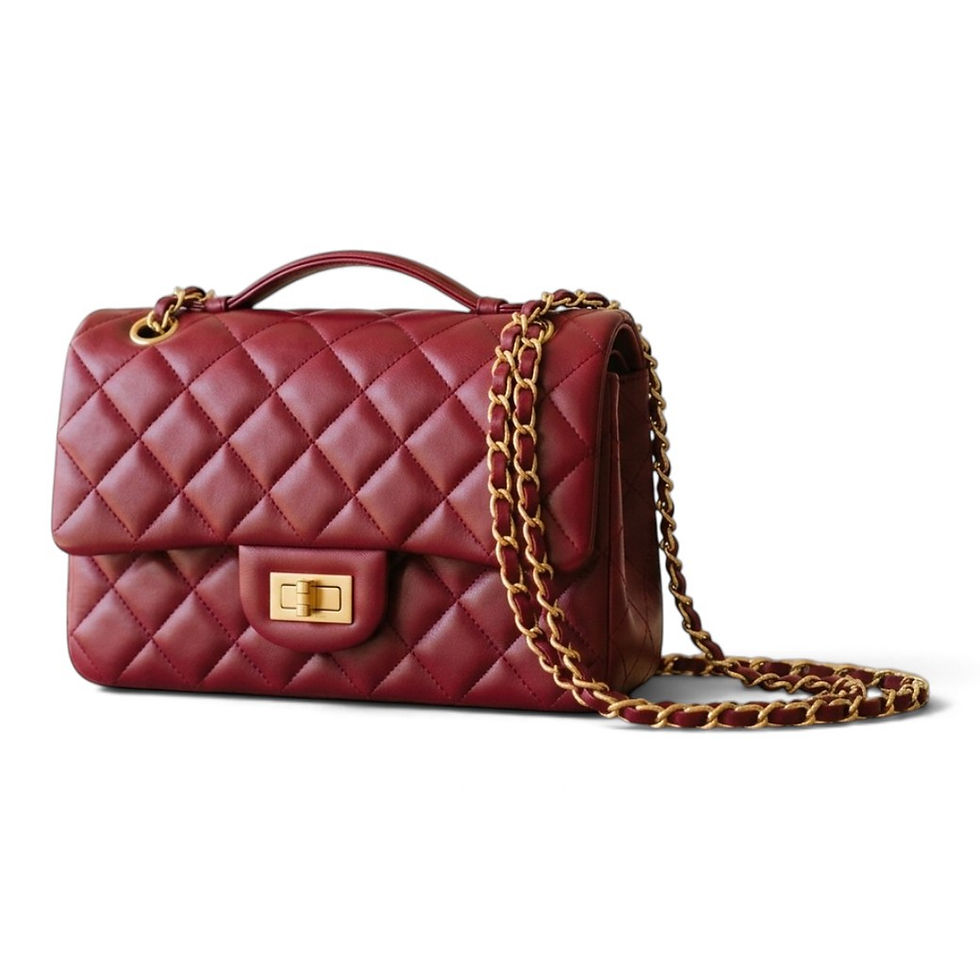
That means a resale company, consignment business, auction house, or managed marketplace could face the same basic question as a Fifth Avenue boutique: If a covered Iranian UN related official, or someone buying on that person’s behalf, seeks to acquire the item, what is the business expected to do?
The resale setting may make the question harder rather than easier. A transaction can involve a buyer, a different cardholder, a personal shopper, a delivery recipient, an assistant, a hotel address, a freight forwarder, or another intermediary. The item may be paid for remotely and delivered elsewhere. A high value watch or handbag may also be more likely to trigger internal fraud, payment, or compliance review simply because of the transaction size.
The issue is not that resale businesses should assume that a high value buyer is suspicious. They should not. The issue is that resale companies handle exactly the portable, valuable goods named in the advisory, often in transactions where the purchaser, payer, recipient, and ultimate owner may not be the same person.
That makes the State Department’s missing implementation details relevant to resale as well as new luxury retail.
Enforcement Is Also Unclear
The advisory warns that violations may carry consequences under the Foreign Missions Act and Iran related sanctions authorities. It also notes that the Treasury Department’s Office of Foreign Assets Control, or OFAC, may impose civil penalties for sanctions violations, potentially up to the greater of $377,700 per violation or twice the value of the transaction, subject to the governing law and applicable regulations.
What the advisory does not do is spell out how enforcement would work in an ordinary retail setting. It does not describe a routine inspection program in which State Department officials visit luxury retailers, watch and jewelry stores, handbag boutiques, department stores, wholesale clubs, auction houses, or resale businesses to examine sales records.
It also does not say whether retailers would receive warnings before enforcement, whether the State Department would seek an injunction, when a matter might be referred to OFAC, or how the government would view an unintentional sale.
The government may have information that the public does not, including payment and shipping records, sanctions screening results, retailer documents, and diplomatic information. An outsie observer also cannot determine that a particular sale was improper simply because a named official was photographed near a luxury store or was later seen carrying an expensive handbag.
The advisory offers no public example of a retailer transaction that the government has found improper. That leaves sellers to decide, often in the moment, when a sale should raise a question and whether it should be paused, declined, or referred for advice.
What a Workable Plan Could Include
If the State Department expects luxury retailers to stop covered transactions, it should provide a practical way to do so.
At a minimum, retailers need:
A short, "plain English" decision tree for sales associates, managers, e-commerce teams, and client services employees.
Clear instructions on when identity verification or further inquiry is appropriate.
A dedicated escalation channel that works during all retail hours.
Specific guidance for third party payers, assistants, personal shoppers, gift purchases, delivery to hotels, forwarding addresses, and remote selling.
Clear non-profiling guidance, making explicit that Iranian nationality, language, ethnicity, surname, or appearance is not evidence that a person is covered.
Guidance for luxury and resale sales involving third parties, remote orders, gift recipients, and different payment and delivery contacts.
A Handbag Sale Is Not a Sanctions Decision
The State Department has stated its reasons for restricting luxury shopping by a narrow group of Iranian officials traveling in connection with UN business. It says the measure is intended to prevent the Iranian regime from using diplomatic travel to obtain goods unavailable to much of the Iranian public and to address potential sanctions evasion and proliferation financing risks. Those are serious concerns. But announcing a restriction is not the same as giving retailers a clear way to follow it.
A luxury store cannot simply tell a young associate to “be careful” and expect that person to make a correct diplomatic, legal, and customer service judgment in real time.
That is especially true for small consignment boutiques, independent luxury resale sellers, local auction houses, and other small businesses. Unlike major luxury groups, they may not have in-house legal, sanctions, security, fraud, or compliance teams keeping track of government announcements and explaining what staff should do. Yet they may sell precisely the high value handbags, watches, jewelry, and other goods at issue.
The burden then falls on businesses with the fewest resources to decide whether a sale raises a concern, what information they can reasonably request, when to pause a transaction, and when to seek legal or law enforcement guidance.
The question is not whether the government should address sanctions evasion or illicit procurement. It should. The question is whether the policy gives retailers of every size clear, lawful, and workable directions for identifying the narrow group it targets, rather than leaving frontline employees and small business owners to become sanctions lawyers at the handbag counter.
Full disclosure: This post reflects my personal opinions and observations based on publicly available information. I was not paid or otherwise compensated to write it. It is intended for informational purposes only and should not be considered professional, financial, or legal advice. The image of the watch and he handbag were generated by AI.


Comments